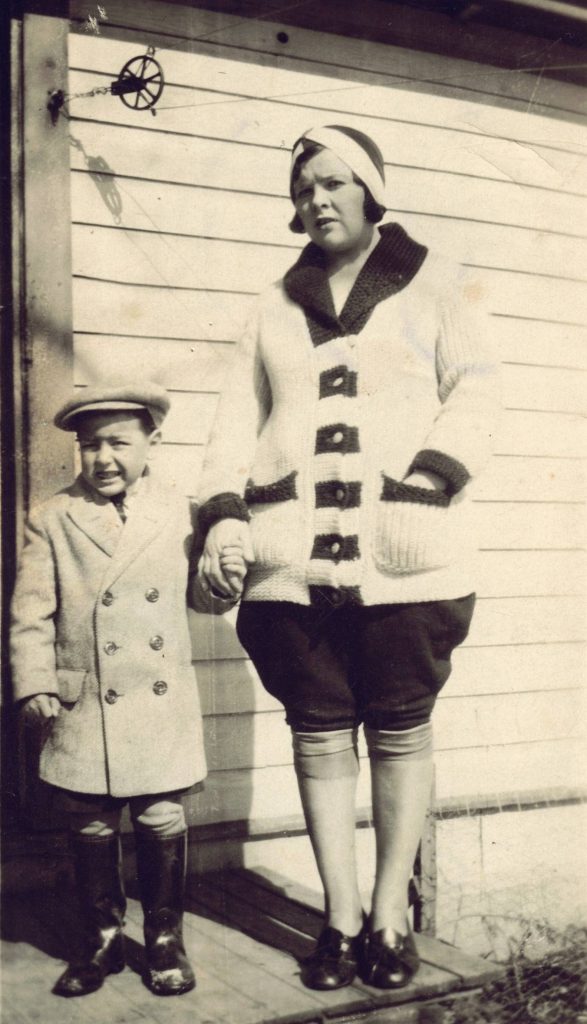
To my knowledge, this is the only picture of my great grandmother (Dad’s grandma), Lucy (nee Settee), who was born in 1906 (along with my young grandpa). In Dad’s early years, he and his parents lived in his grandmother Lucy’s house off Portage Avenue in St. James. Lucy owned a café, or as he called it, a greasy spoon, at the corner. Dad would often describe her as his “wild grandmother”. One summer while Dad was at the beach he returned home to find Lucy had been careless and lost his beloved dog Scamp, his boyhood companion. It was a loss he never recovered from. Lucy later surprised him with a CCM 3-speed bike from Eaton’s as a birthday present before he began grade 5, liberating him from his mother’s one-speed “wonky pink bike”, perhaps an attempt at redemption.
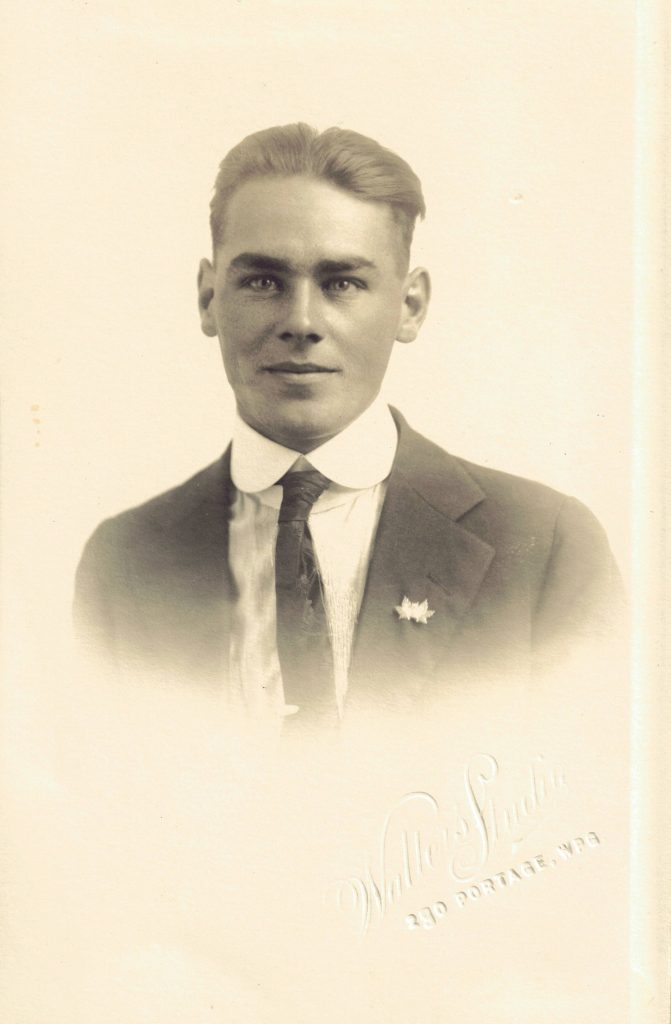
Dad’s grandfather, Vernon Reid Davies, pictured below. Now I know where Dad’s gorgeous blue eyes came from! To my knowledge, this is the only close-up picture we have of him in our family. Born in 1897, Vernon grew up in Selkirk, Manitoba.
Dad’s most significant memory of his grandfather was that he would bring cashews in a can to him as a gift. His son Delmar (Dad’s Dad) continued the tradition, gifting our family cans of Planters peanuts and cashews in the 80s and 90s for Christmas with gift tags on the outside, providing hints to what’s inside by with Grandpa’s capital letters in coloured marker “YUM-YUM” (in case the short cylindrical shape of the gift and dulled rattle inside when shaken wasn’t clue enough!).
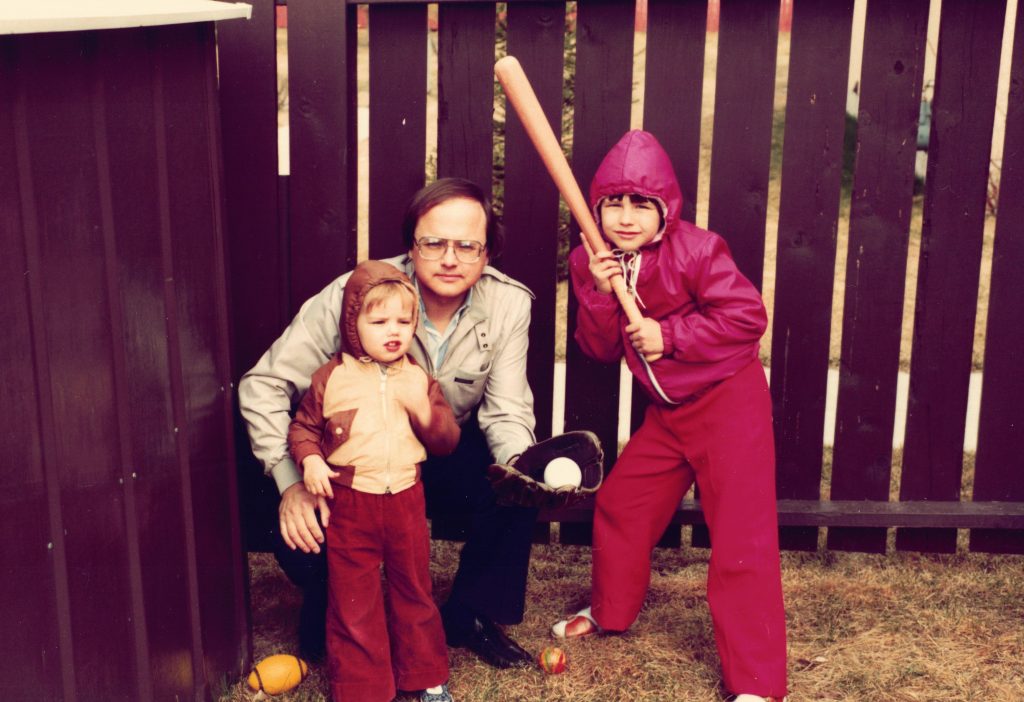
In the spirit of yesterday’s post with a baseball theme, I am reposting Dad’s poem “Farm Baseball”, which was inspired by a baseball game in 1984 on a distant farm in the Libau area (site of family’s first homestead on my Grandma/Dad’s Mom’s family) in the province of Manitoba. It’s one of my favourite poems.
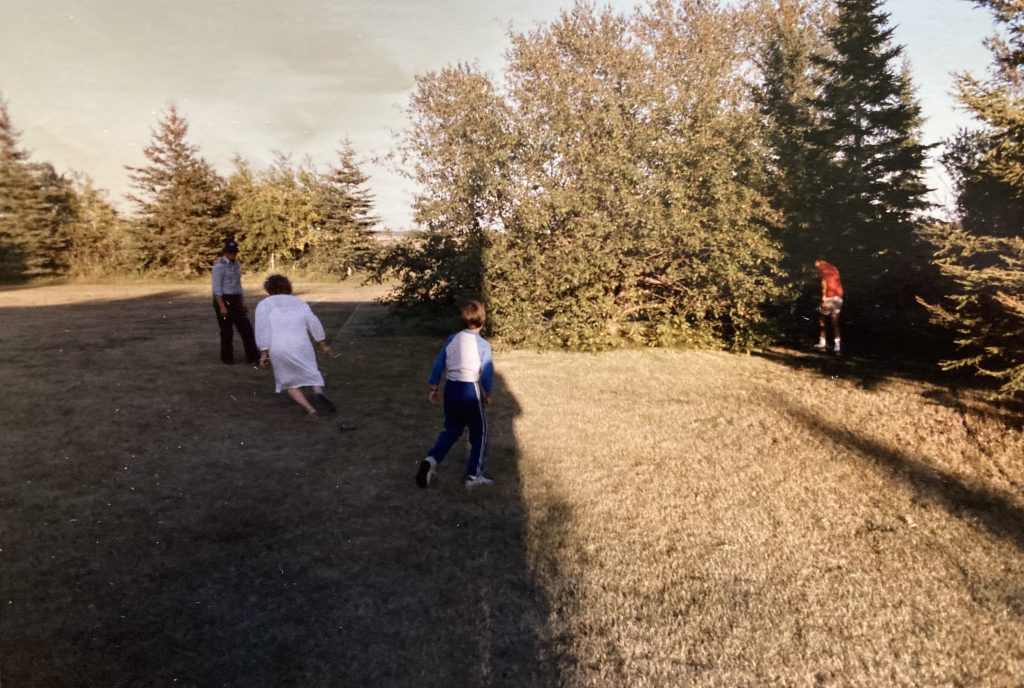
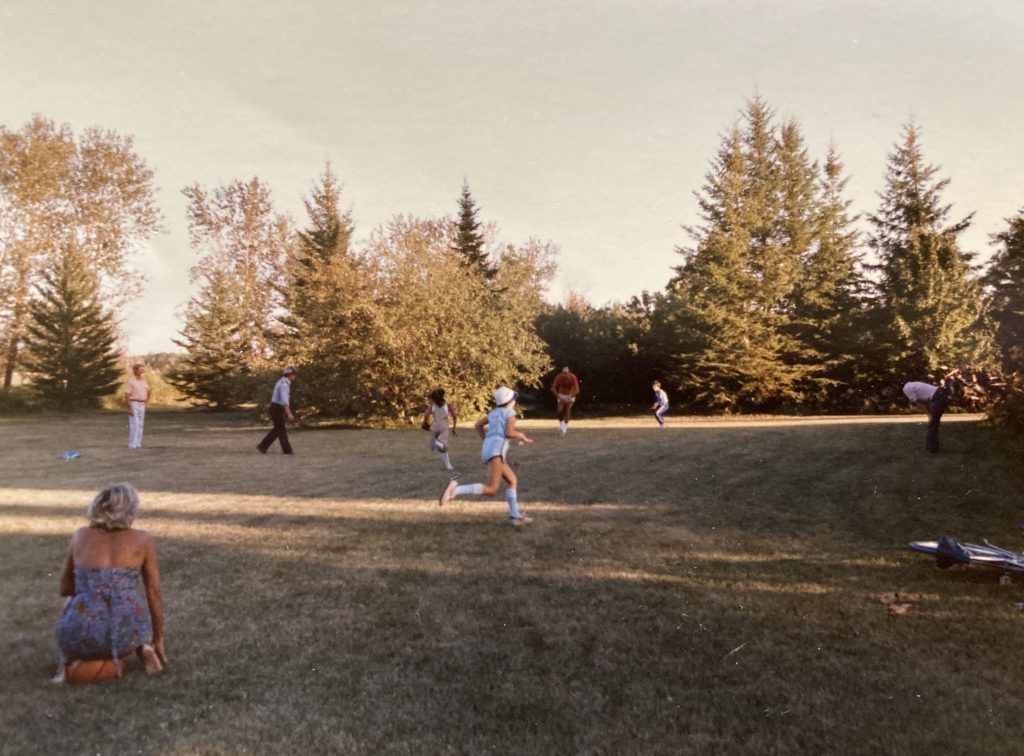
The baseball game took on a mystical quality that night on my Great Aunt (Dad’s Mother’s sister’s) farm, played with extended relatively rarely visited. I remember being surprised seeing the youthfulness of usually more reserved older relatives as the kids vs adults game took shape. My Aunt Katie in kaftan is spotted running wildly in one of two pictures that survive as artefacts of that night.My Grandpa is in red shirt searching for a home run ball that landed in the trees as Dad’s cousin Butch watches on in baseball hat and Aunt Katie in kaftan runs wildly between bases.
In the second pic that follows Dad’s poem, my Grandma (Dad’s mom) crouches in front in sundress at home plate. I am running in front wearing a sunhat with visor.My Uncle Mike (Aunt Katie’s husband) is bent over on the right, likely still smarting from the hard crack of the ball I sent into his middle section prior to the photo (I still wince at that one, although at least it was an out for kids, and helped his side!).
After supper we play ball in the yard embraced by shadows of gathering dusk.
My cousin wears a John Deere cap, the one his father might have worn in a previous game.
The children giggle: it’s them against us as it was 20 years before. Small nervous offspring testing their uncertain powers on a makeshift diamond: shoes and chairs for bases.
Dad hits a long fly into the tall trees that sprang from saplings planted long ago. He pauses for a moment to savour the ball’s high arc— thru the clean August air.
The adults move to make a play on my son. “Get him–get him” cries my mother, reliving the time she tried to catch my dodgy youth.
Double-play: my aunt waits at first with outstretched arms to tag her granddaughter, the two of them lost in private ecstasy.
Like 20 years before though, the sky turns to velvet and the grown-ups tire first. The children plead for extra innings but umpires have deaf ears.
Played out, we all retire from the field our ritual of the summer lawn postponed because of dark.
Walking toward our twilight cars we dream of being around in time for the next unscheduled game.
Dad’s Original Notes Accompanying the Poem on his Blog:
“The figure a poem makes. It begins in delight and ends in wisdom.”–Robert Frost, “The Figure a Poem Makes”
A poem about memory (one key form of consciousness), the passing of time, and the human and family rituals that repeat themselves briefly giving meaning and purpose to our lives and activities. It is fairly clear that the poet’s consciousness takes in a lot including the various consciousnesses and unfolding experiences of the individual players.
Nature often plays a role or is the backdrop to the many moments of being in our lives. In a sense, it is as much a character as any of the humans in this scene. Every moment of consciousness takes place in a specific moment or unique context. And as you read the poem, you are also aware of what that some of the characters may not be conscious of, too. And so it may be that perspective may also have a significant role to play in whatever process, event, or emerging consciousness.
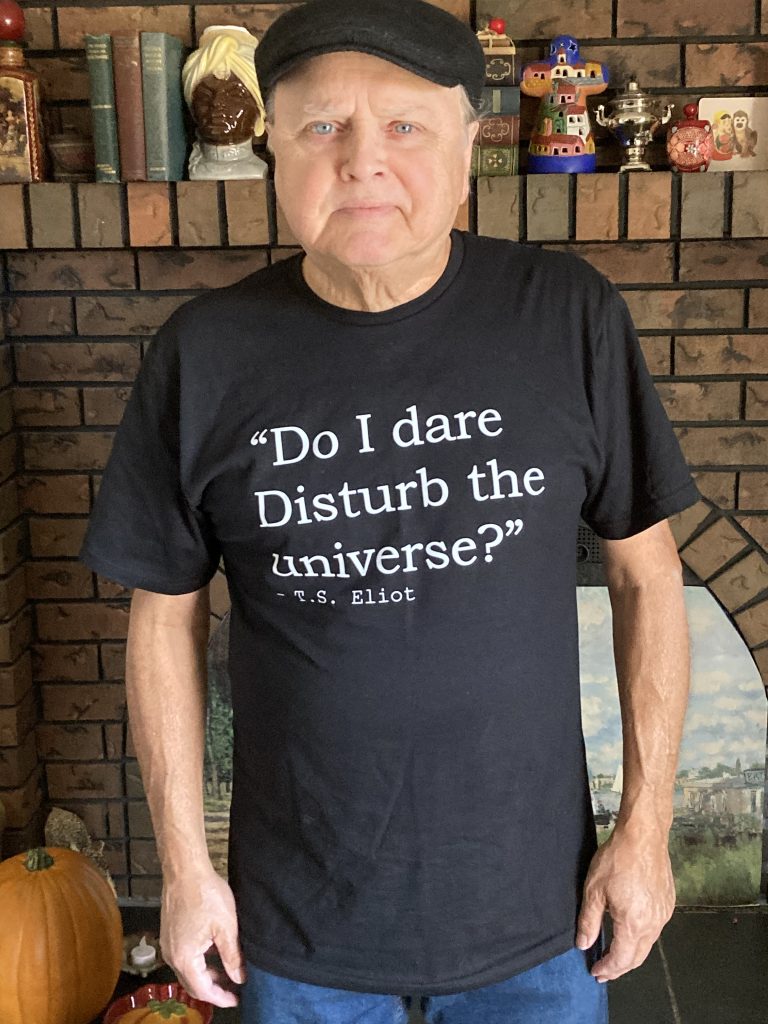
We received a kind note from one of Dad’s many publishers today, one of many we’ve received over the past month, and just had to share. Everyone who came in contact with this remarkable person were almost always deeply touched by the encounter. He always took time to find meaningful ways to connect with others, find common ground, break new ground, share his own passions, and try to forge new connections between people and possibilities. I always marvelled at how he could connect with others from all backgrounds and walks of life. And those extra little acts of kindness and thoughtfulness; he selflessly gave so much. I fervently believe the world has not just a person, but an extraordinary man. Ah, how I wish I could shout it out to the world. I guess that is partly what this blog is, beyond my heart bleeding and the tears of infinite loss, I need to shout it out into the void. Dared dared disturb the universe, and the world was an infinitely better place because of him.
Below is an excerpt from the note. It’s simple, yet speaks to his character so deeply:
“My heart is heavy for you and your family. Know that you are all in my prayers.
Richard was such a wonderful man. He and I shared so many long conversations about literature and spirituality. He even sent me a signed copy of “Negative Capability”. He was the only author who ever sent me Christmas cards and the only author I would touch base with every so often to see how he was doing. He shared photos of the family and the children/grandchildren that he cherished so much. In fact, we exchanged emails not too long ago, so this news takes me completely by surprise.”
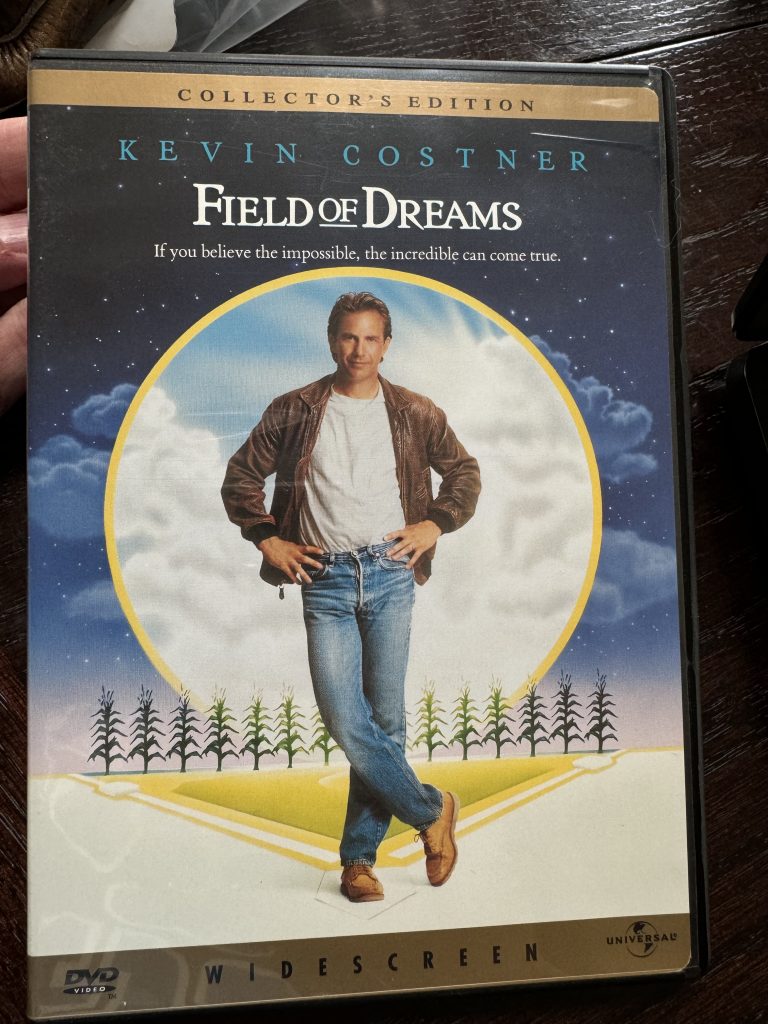
News breaking of James Earl Jones’ passing yesterday hit hard. Although best known as the voice behind Darth Vader in Star Wars, my heart lands on a different iconic scene from a very different movie.
I’m suddenly at Eaton Centre, walking into the empty air conditioned theatre on a hot summer weekday afternoon with my brother, Dad and I, popcorn in hand. I remember walking out completely transformed and utterly mesmerized. Dad intuitively knew this one would be good for Scott and I to see in person, together. He always fed us the highest quality movies for to feed the soul. Oh, the many times Scott and I stepped into our small hobby garden’s row of corn afterward, just hoping…
Even to this day, faced with a field of corn, I will still try, the dream ignited within is still that tangible – just as I still occasionally close my eyes and reach toward the back of my closet (wardrobe), desperately hoping for my hand not to hit drywall…
Dad’s movie description: “1989. Field of Dreams, a gem about the American Dream as seen through baseball story; Costner at his best, Lancaster and Jones even stronger; fanciful scenes, remarkable moments; maybe the best-ever film about dreams and possibilities coming true”.
The scene that imprinted itself on my heart forever? It is likely not the obvious choice. It is the moment after the baseball game Ray and James Earl Jones’ character Terence Mann goes to. Terence does not let on he’s actually heard the voice at the game, urging the quest forth, and Ray drops him off at home. The van does a U turn – and the headlights suddenly fall on James Earl Jones standing in the middle of the road. Just thinking of the scene gives me chills. That spinning of the van… it’s fate in the balance… the dice are rolling… that hovering between belief and non belief. Choice and self actualization vs surrender. Following your heart vs being safe. Hope vs defeat. All the core concepts Dad ingrained within my being, as he showed me how to live my life.
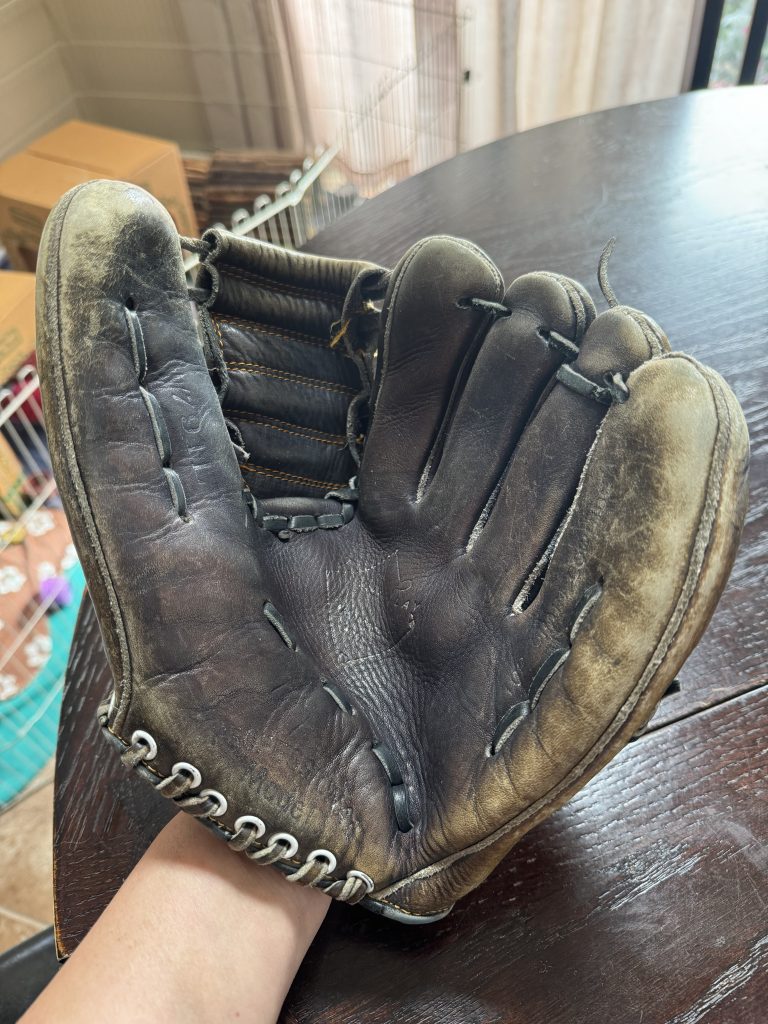
This past winter, Dad passed along an unexpected treasure during a brief meeting – a familiar, well-worn, well-loved brown baseball glove. I’d learned to catch and throw with it with Dad. I had used it in my youth for baseball games in elementary school. It still smelled the same – like well aged-leather and sweat – and immediately invoked that anticipation you feel when the air is filled with potential and you’re ready for the next play. I always intuitively knew it was old, but I had no idea just how old. He received it in grade 3-4 and used first on grade 5-6 school teams, playing second base. After he handed this treasure over, he said that I could put it on whenever I needed to feel his hand holding mine.
I found this piece of Dad’s writing in a binder humbly titled (on yellow sticky note taped to the front) “Who was Dad” on September 7, 2024. Dad had not shared this with me previously, but it was with his other writings, and I’ll publish it below as it was found.
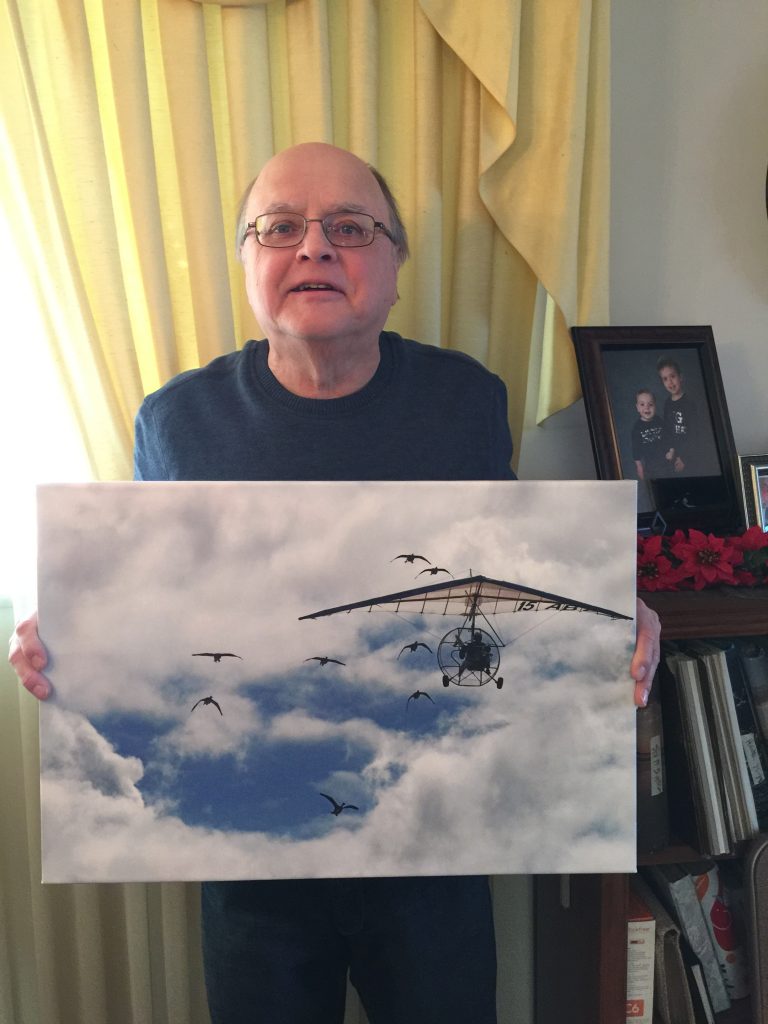
It was a difficult read, as it describes his own bedroom, complete with artifacts (artefacts). In fact, his room sits like this still. As an aside, the “Father Goose” image mention struck me particularly hard as it was a particularly meaningful art piece I had gifted him. We’d loved seeing the movie Fly Away Home together long ago, based on the real-life story of Father Goose who led Canada geese in his ultralight aircraft how to relearn the ancient wisdome of migrating south. (The movie follows a parallel story of an estranged father and daughter as they move toward a path of reconciliation.)
In the short story below Dad predicts what would ultimately be the cause of his own death. It remains unfathomable to me that my beloved Dad who had the greatest hearts suffered from heart failure in the end.
The Poet’s Death Bed – Richard Davies
The coroner was greeted by the deceased’s wife at the front door when he arrived, gave his sincere condolences, and was shown upstairs to a small room with open blinds, leafy plants in one corner, and a single bed embracing the body. The only other furniture was a chest-high bureau, a tiny night table, and a tall bookshelf with a large looming bust of Shakespeare on top.
On the green walls were two undersized heads of Holmes and Watson, a poster of “Father Goose” airborne in his ultra-light aircraft surrounded by geese, and a framed poster of an old Dylan Thomas LP showing an imagined boy flying freely above a fantasy town.
On the other wall was an Alex Colville showing a young woman riding her bicycle in sync with a crow in flight beside her and yet another poster of early Canadian voyageurs paddling into a mysterious mist above the morning waters.
Only then did he choose to look down at the deceased stretched out, as he had been found, on the narrow bed, covers pulled down. The man wore only modest briefs and had been left that way for the coroner to discover when he entered the room. There was no sense of struggle or signs of anguish, only a strange peaceful look on the dead man’s face.
The coroner continued his examination and wrote down his findings and verdict on a clipboard he had brought with him. It was when he stood up that he noticed a piece of paper underneath the night table which he bent over and picked up. It appeared to be a handwritten poem on both sides which went:
“It is no longer for me to say for you. You will need to fill in the blanks yourself, to answer the remaining questions, to find your missing peace and decide which dream is worth the living and dying for.
It remains but for you to walk alone on that beach with nothing but your thoughts. It is up to you to decide if touch is the best art of all and if an old Inner Child still lives.
It is not in this poem then that someone will smile fondly at you and find all you saw so interesting. It is no longer the job of this poet to free you, to whisper your name, or tell you where all the treasure’s hid.
No it is you alone who will write the last poem, love- your very own, and tell us all who you truly, really are.”
He thought for a moment and replaced the paper under the night table for someone else to find later. The quality of his day forever changed, he was about to leave the house when a family member appeared and inquired about the cause of death.
Normally he would have said nothing and maintained confidentiality, but he thought back to the room and what he had seen and read there which had moved him unexpectedly. “Heart failure,” he said.
Outside, the coroner got into his car, started it, and turned on the radio, immediately searching for a classical FM station. “Poor devil. Like all high romantics,” he thought to himself as the music began to flow, “his heart just gave out finally.” And he wondered, about the poem’s significance, what the poet’s life must have been like, and then, suddenly, what his own sad end might someday be.
The last two days have been excruciating in terms of notifying utility and credit card companies of my father’s passing. How many times does one need to say “He’s dead. He’s passed away. My father is gone, dead. No, it’s not for me, it’s for my dad, but he’s deceased”? Apparently again and again and again, in many different ways, a thousand cuts. I’d say “death by”, but this waking sort of suffering is far worse.
I’ve been stuck in that netherworld of waiting for hours on hold, listening to cheery music, advertisement for Apps, and “we’re experiencing higher than usual call volumes” on repeat. In the end Rogers/Shaw has won for longest wait time so far: that one was resolved at exactly the five hour mark, after two calls and multiple social media direct messages later. Despite the lady’s cheerful reassurance every four minutes during the first 2.5 hours I was on hold (before the system hung up on me) that the takeover of Shaw from Rogers wouldn’t impact me, it did in the end. After an hour and a half of going back and forth with a service rep on X (only used for company shaming these days, Mastodon is our beloved haven) via messages, the Rogers fellow couldn’t help me at all. He kept making me verify my dad’s identity again and again, coming back with saying my father didn’t exist (which ironically is true). Finally it was revealed that Rogers systems aren’t talking with Shaw systems, and he had zero access, please call the line that hung up on me after 2.5 hours.
When you do finally locate a human being (or good AI version, hard to tell the difference these days), they often offer their condolences, usually with that obligated hollow sounding way. A few alter their tone and sound genuine. I always long to tell him about the multifaceted gem Dad was; how he lived his life and brought joy to everyone. How talented and loving and wonderful he was. How the world has suffered a great loss. Instead I offer a weepy “thanks” and get on with the business at hand.
In the midst of waiting on Shaw and dealing with Epcor rather tearily at the same time, the Epcor fellow said “he’s in a better place now”. Given the hell of bureaucracy, a world eating itself and facing life without the joy of Dad, his words rang all too true.
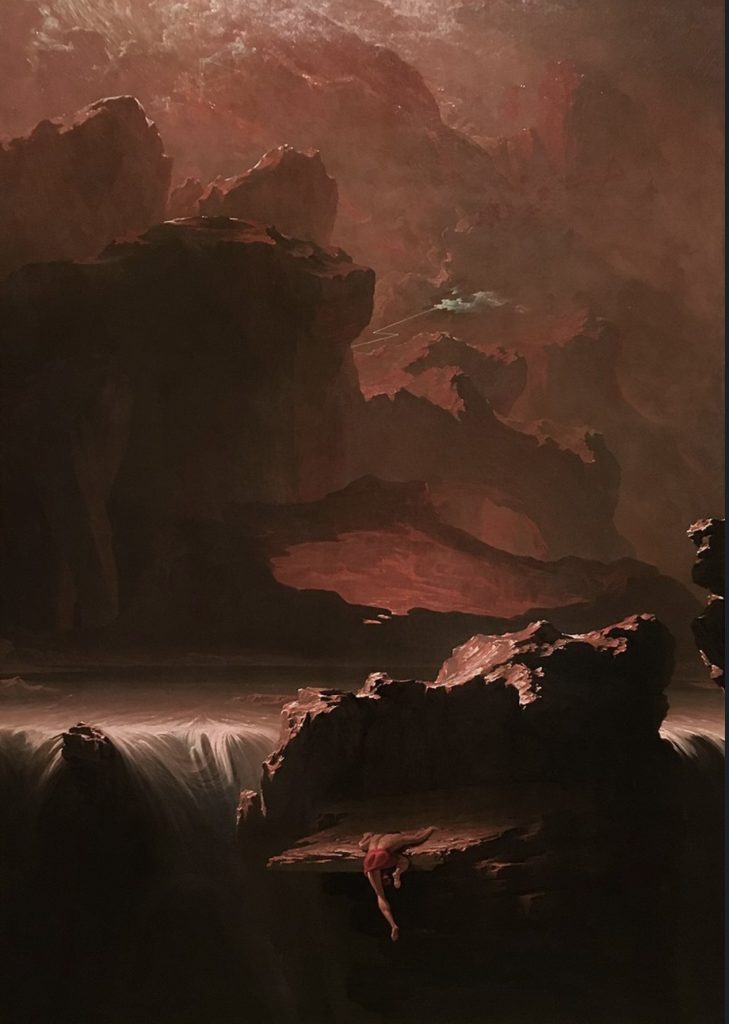
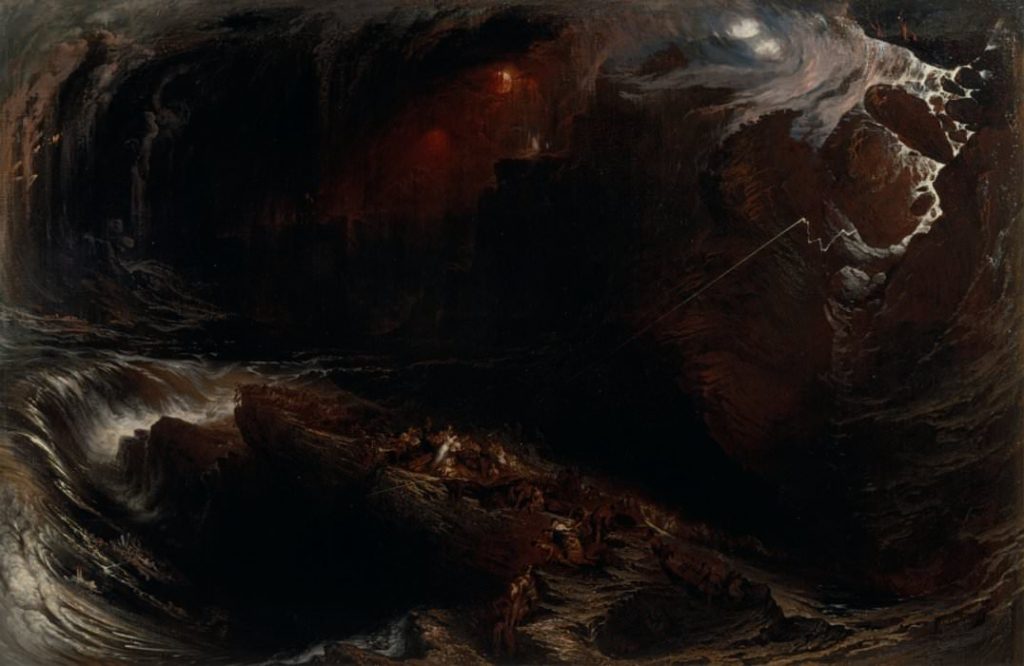
Oil Painting: Sadak in Search of the Waters of Oblivion – John Martin (1812)
“Thou wast not born for death, immortal bird” – Ode to a Nightingale, John Keats
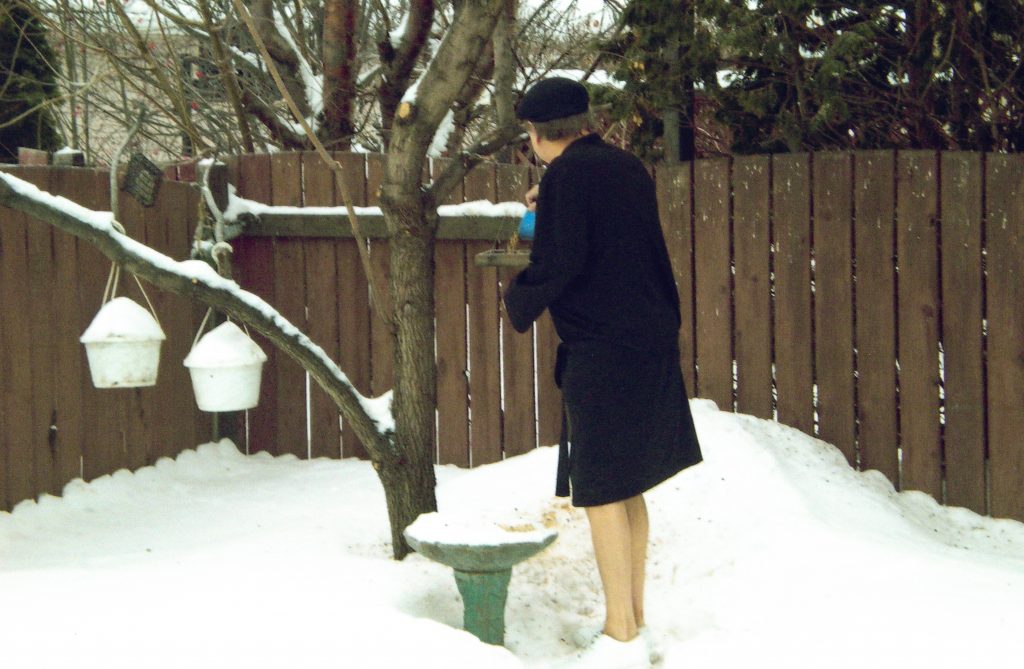
Dad felt a deep kinship with nature and was very close to his feathered friends and squirrels. He would would head out donned in robe and cap early in the morning, even on the most frigid -50C windchill days, to feed the “little blighters” (a term used by his Dad/my Grandpa Davies- affectionately, of course!).
The outdoor birds in the area relied on him for sustenance, particularly when times were lean during winter, often watching for him nearby, quietly, ready to descend when the seeds were refilled. (Occasionally birds/squirrels would peer inside the living room window rather pointedly if the stash was getting low.) He relied just as much on them, a tether to the wild world within the urban landscape, a constant reminder of nature’s pure and rugged beauty. Always prepared for an encounter, his pockets would often have peanuts for the squirrels and jay, and he’d always affectionately offer a peanut to me whenever he stopped by for a visit, a simple gesture which I would always pass along to our appreciative magpies.
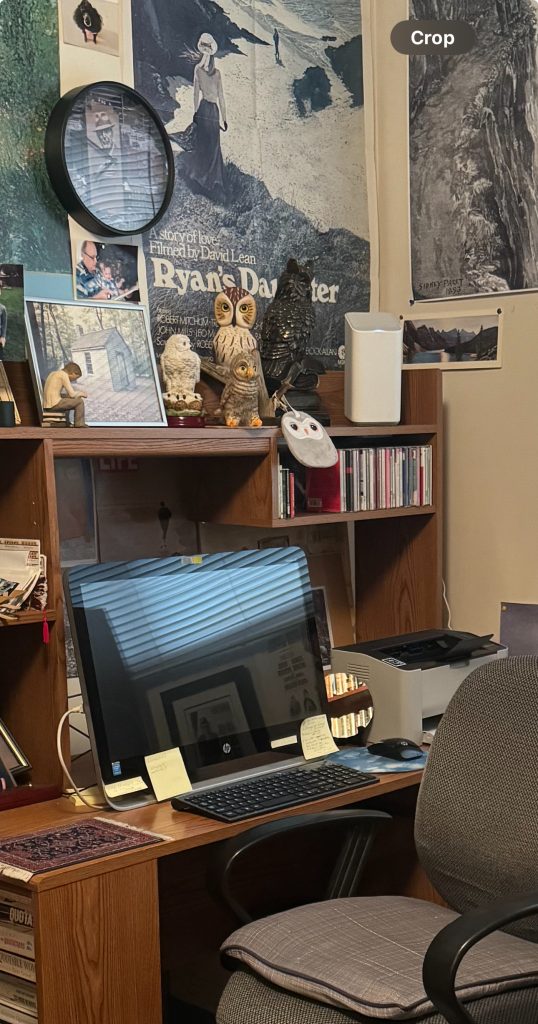
By extension, he also loved owls. The symbolism was naturally attractive – wise, deep, powerful, and (clearly intimated) well-read. A perfect fit with All That is Dad. He collected a few special owl momentos over the years, some of which he kept above his desk. (His study is a veritable feast for the senses, and will have to be examined more closely at some point later.)
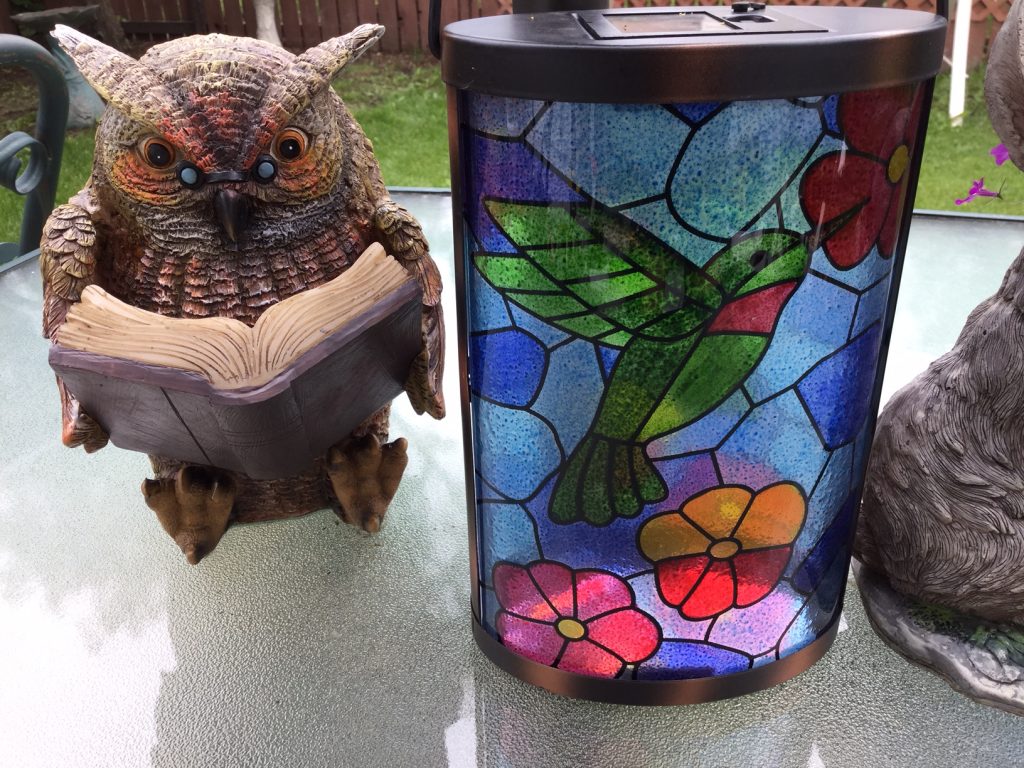
As Jason and I associated everyone in the family with an animal (a beautiful tradition started by Jason’s late father; that’s another post in time), we affectionately referred to him as “Grey Owl” over the years, short for the “Great Grey Owl”. The Great Grey is largest owl in the world by length, and one of the most dapper and magnificent (and wisest looking) owls – a perfect fit. I was so excited to find an outside statue of an owl reading in 2019 for Father’s Day- and it looked just like Dad reading!
(When searching for a picture of the reading owl below, I was struck by this photo below on Mom’s iPad. The hummingbird beside reminds me of a Seals and Crofts song Dad was drawn to in his last year of life and went out of his way to share multiple versions with me. Its haunting refrain resonates especially now: “Hummingbird don’t fly away, fly away. Hummingbird don’t fly away, fly away”)
On July 29, 2024, the family been called in to ICU. It was one of those horrific, dreaded calls, during those terrible early morning hours when there are no good calls.
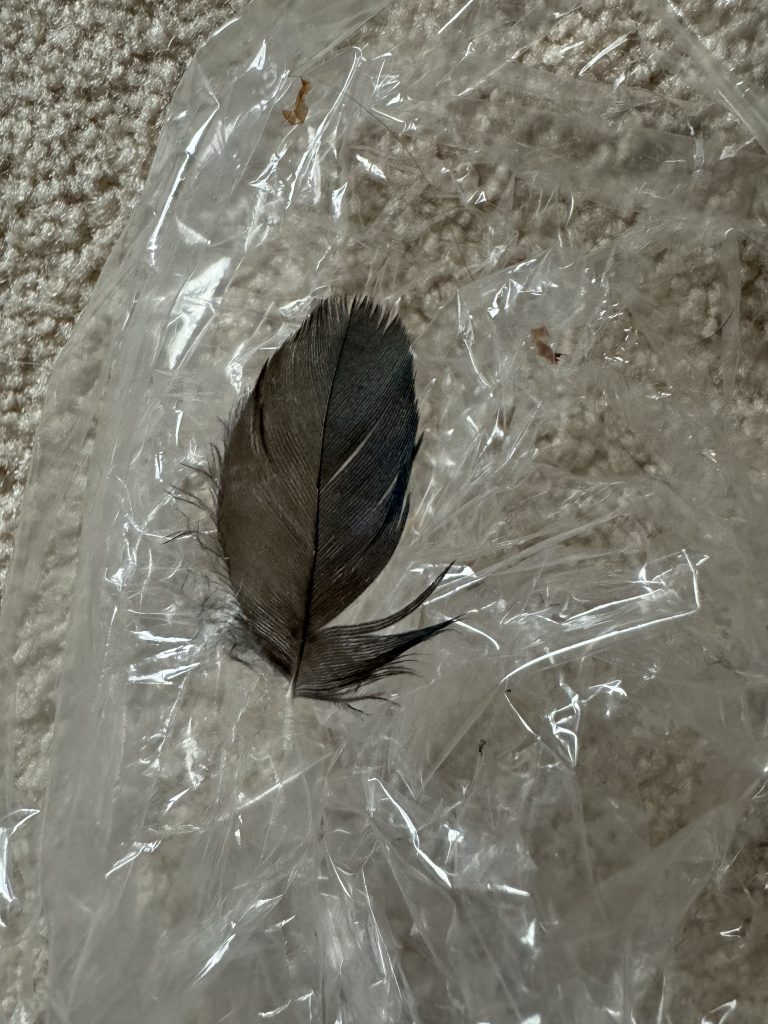
Afterwards, our hearts and lives fractured, we made it home in that surreal dissociated trauma state, and as soon as we stepped out of the van we were greeted by a tiny grey feather. It was perfectly placed, but very distinct, the dark grey juxtaposed against the light concrete driveway. The symbolism was far too much to ignore; Dad had transcended and taken flight.
As we stood in utter shock and tears staring, a light wind lifted it gently and it slowly blew into the garage. It led us in. We we followed it, and then gathered the strength to go inside, entering the house for the first time in a world no longer with him in it. (Feather below; this past week I collected it in a bag, in a prescient moment before an accident in the garage. The bag is similar to the feather he had collected and shared with me years ago.)
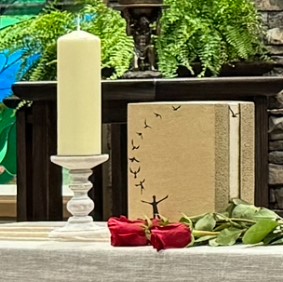
Epilogue: A few days later, while working out Celebration of Life arrangements, we learned of the beautiful urn Dad had chosen to house his remains. It is titled “Take Flight”:
“A bird in the house means a death in the house” – A Bird in the House, Margaret Laurence
While not superstitious to any significant extent, this portent from Margaret Laurence’s story has haunted me ever since I encountered it in high school. The quote comes from the short story “A Bird in the House”, within the same-titled novel of eight short stories. A sparrow trapped in the main character Vanessa’s bedroom foreshadowed the death of her father.
Enounters with birds in unfortunate circumstances have always deeply upset me, from the time I found a lifeless robin amongst our garden of corn as a child.
This spring I heard a loud chirping off and on over a few minutes. It sounded as if it was coming from the attached garage, but the sparrows were unusually loud in the front, so I wasn’t entirely clear from whence the song came. I opened the garage door with dread. All was quiet. I heard birds chirping outside. It was all quiet in the garage, and so I closed it, feeling relieved.
The next day I was backing out with the Lake Louise-green Toyota Corolla Dad had so lovingly passed on to me, when I hit the brake abruptly on the driveway. In front where I had just pulled out, a tiny lifeless body lay on the cold, grey garage floor.
I knew what it was before I climbed out to more closely inspect. My heart in my throat I found it laying peaceful, under my car. I feared for its final moments, and I wept.
Jason helped me lovingly wrap the tiny body in some white fabric of my late Grandma’s (Mom’s side) and I placed it in a tiny box, sealing and writing on the outside. And then I sobbed some more.
A few weeks later, my parents had a very upsetting event. They’d gone a bit incommunicado for a bit and I knew something was wrong. When Mom finally wrote, very upset she shared a picture of what she’d found in the pink scaevola, right beside the door to the house on the patio. My heart was in my throat.
A sparrow had found its final refuge in Mom and Dad’s beautiful flowers, looking so peaceful, as if asleep. The deep feeling of horror and dread was reignited, and many more tears of utter sorrow for the tiny sweet bird were shed.
A few weeks later, when our garage door was about to be repaired, I opened the door, awaiting his imminent arrival. The wind was blowing from north to south, and I noticed some small light objects blowing in the open door. Poplar fluffs or some other seed from a blossoming tree, perhaps? Closer investigation proved to be a couple of sparrow feathers. I swept them out, thinking at the time that was the end of that. And yet more and more feathers kept blowing in, I kept sweeping, the service man arrived, I kept sweeping, quicker and more desperately at this point.Frantically sweeping, and realizing now that a murder had taken place nearby. I grabbed paper towel, picking them up as they continued to blow in, and kept sweeping.
My stomach sick, I kept sweeping. I could barely focus on the conversation with the garage man, who seemed unperturbed when I explained what I was doing.
I so desperately – unsuccessfully – tried to keep out the the feathers from my home. They were likely all that remained of a poor sparrow. An innocent sparrow who had met its untimely end via a horrific and unfortunate violent act. I kept sweeping, utterly traumatized. Tears were shed. Picture below was taken that day. Likely it is a feather that sits in the foreground by the scattered shoes. There were too many to keep out of my home.
A few weeks later, Dad was admitted to the hospital under the watchful eye of the Grey Nuns Hospital raven. The massive, craggy beast would shrieked its hoarse cry from the roof at me, and all other patients and visitors.
Despite the uneasy feelings that had been building for months, the constantly pushing back of terror and fear, and the multiple portents (this post focuses on birds; a future one will encompass the truly Shakespearean-styled nature-is-out-of-harmony apocalpytic crescendo of events we experienced), we all pushed on. What else can one do?
During her last few years on this earth, my late Grandma (Dad’s Mom) would quote Dylan Thomas: “Rage, rage against the dying of the light”. I had deeply internalized this poem and it served well during these final weeks. Until the last moments, we fought, and Dad fought. We raged, oh friends how we raged against the dying of the light. Ultimately all of us were in fate’s hands alone.
A Bird in the House*is an extraordinary novel (series of short stories) by Canadian writer Margaret Laurence. I was first introduced to the book in Senior High School English during a particularly coming of age time. The short stories, themes and images in this novel left a lasting impression, continuing to resonate through the years as I forge my own path in this world (okay, to be perfectly honest, they have at times haunted me, too).
Dad was particularly fond of this book, and was even able to secure his own cherished (and very rare) signed copy. Themes and expressions from these poignant short stories would arise in family conversations through the years (including the last weeks in the hospital). Below are a few of his posts to absorb.
(I’ll begin to share the significance of this book in the next blog post…)
June 9, 2021: Dad’s Blog Post on ToThineOwnSelfBeTrue.ca:
January 9, 2019: Dad’s Blog Post on ToThineOwnSelfBeTrue.ca:
March 10, 2022: Dad’s Blog Post on ToThineOwnSelfBeTrue.ca:
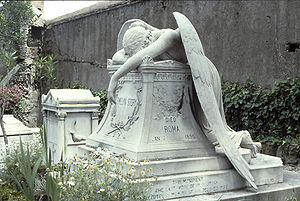
Our family continued to stop at Neepawa, Margaret Laurence’s home town as we travelled on road trips across the prairies to Dad’s home town of Winnipeg, and visit her houses and grave. We would also make stops in the graveyard, stopping by the family’s gravestones and pausing at the awe-inspiring angel statue in the cemetary, which served as inspiration for the title of another of Margaret Laurence’s novel, The Stone Angel. (Below picture was taken in 2019 – Jason and I (and our travelling rabbit Skye) stopped in Neepawa after meeting up with Mom and Dad for a sublime Winnipeg trip in the city).
* Remarkably, I do not currently have underline capability on this blog, apologies for bolding this title instead of giving it its proper due with an underline.