
Two days before my birthday, I was feeling pretty beaten up. There was a lot going on in life. So many stresses, worries, hollowness, sadness, fear, and general angst. I was outside shovelling, having what I’ve come to refer to as a Sad Shovel, a ritual I have found myself in many times over the past couple of winters. Once again, I felt utterly defeated, on my spiritual knees, quietly begging the universe for support and strength as I scraped and heaved the frosty white snow onto the towering mountains framing the driveway.
The next day, which was the day before my birthday, I was feeling restless. I was back at work, navigating complications and the ongoing emotional strain of caretaking during my breaks, including taking my bunny to the vet’s for subcutaneous fluids, among other difficult moments. In the brief pauses between tasks, when I surfaced for air and tried to steady myself, I became aware of a restless grasping for something, though I didn’t yet know what.
As the workday dragged on, I was suddenly pulled toward a book a friend had mentioned some time ago: The Comfort Book by Matt Haig. It had been sitting in my reading pile for ages. I’d picked it up long ago, read partway through, and then set it down beside my chair by the kitchen table, where it remained for months and months despite the best intentions. Life had crowded it out, and even thinking about picking it up had felt like trying to reach across an impassable chasm.
And yet, for some reason, I walked into the kitchen and picked it up. A thin layer of dust clung to the cover, which I wiped away before carrying it back to my office chair. The bookmark sat barely a third of the way in. I slipped it out – there was no point in saving a spot from that far back in time – and began flipping through the pages. I was searching for something, though for what, I couldn’t have said. A quest without a clear destination.
These kinds of books, featuring a collection of anecdotes and meditations often invite you to dip in anywhere, to read out of order, but I’ve always been a sequential reader, loyal to beginnings and endings. And yet, on that day, I flipped.
Again and again, my eyes landed on a sentence repeated throughout the book: Nothing is stronger than a small hope that doesn’t give up. Each time, I paused, it resonated, and then I moved on.
Then suddenly, my eyes landed on a title of a meditation. I let out an audible gasp and instinctively raised my hand to my mouth. My center seemed to collapse inward in shock.
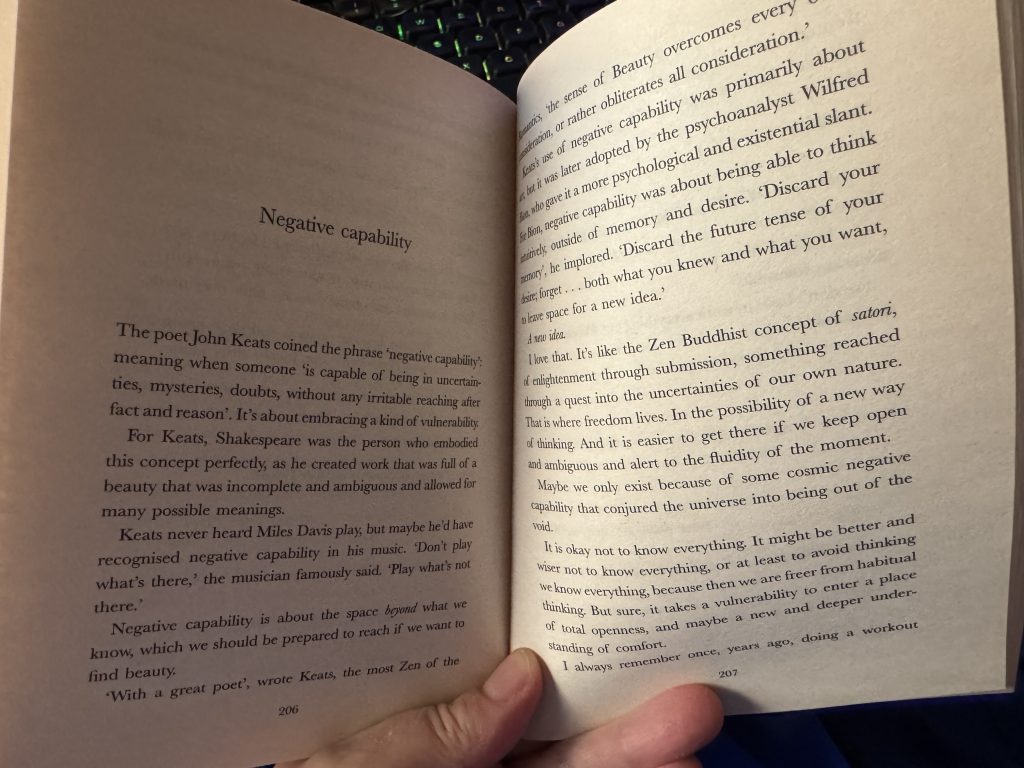
Negative Capability.
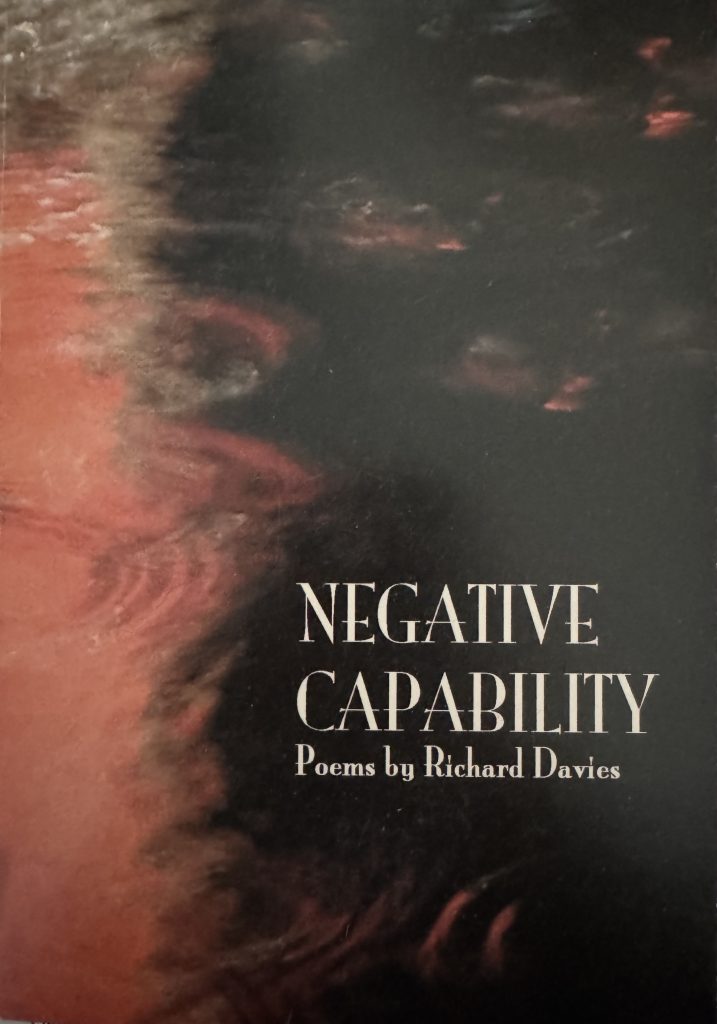
I reread it, stunned and disbelieving. Negative Capability – the title of Dad’s beloved first poetry chapbook, a phrase borrowed from John Keats. Thinking of John Keats was like receiving a shower of warmth, bringing with it fond memories. (Long ago, in grade 11, I pledged to live by John Keats’ words – “O! For a life of sensations than of thoughts”. I realize now that following intuitive pulls was part of that vow.)
The words across the next three pages landed like footfalls on my heart. There were references filled with shared meaning between Dad and me. John Keats. Shakespeare. Miles Davis. Zen. And then there was Satori– enlightenment through surrender, and my screen name, my alter ego, on social media for many years.
Negative Capability. Dad’s beautiful chapbook. And, most meaningfully of all, that collection includes a poem dedicated to me: Notes from the garden.
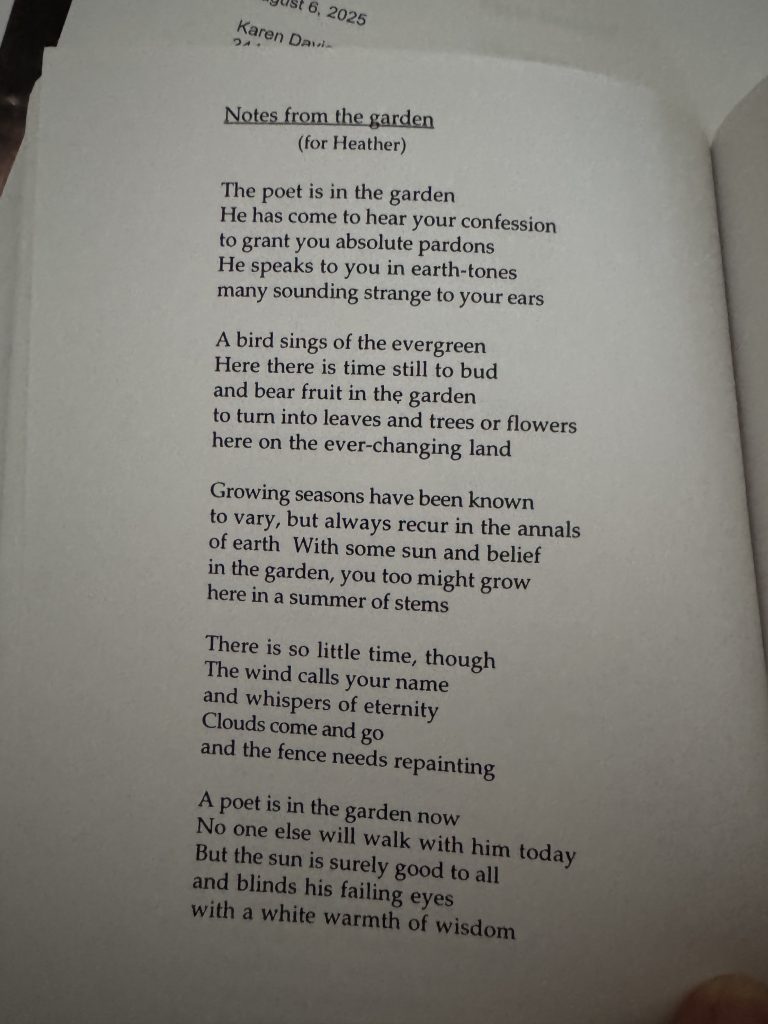
It was deeply comforting – found once again through inner listening, through the kind of coincidences that happen too clearly, too frequently to be dismissed as coincidence at all. A beautiful birthday gift.
Thank you, Dad. ❤️